NVIDIA Nemotron 3.5 Transcribe: more control over the transcriptions in your applications
NVIDIA’s new model combines multilingual transcription with instruction-based control. What it brings to voice products and what I’d measure before integrating it.
 Pool DezaFounder of IA Systems & Data2 min read
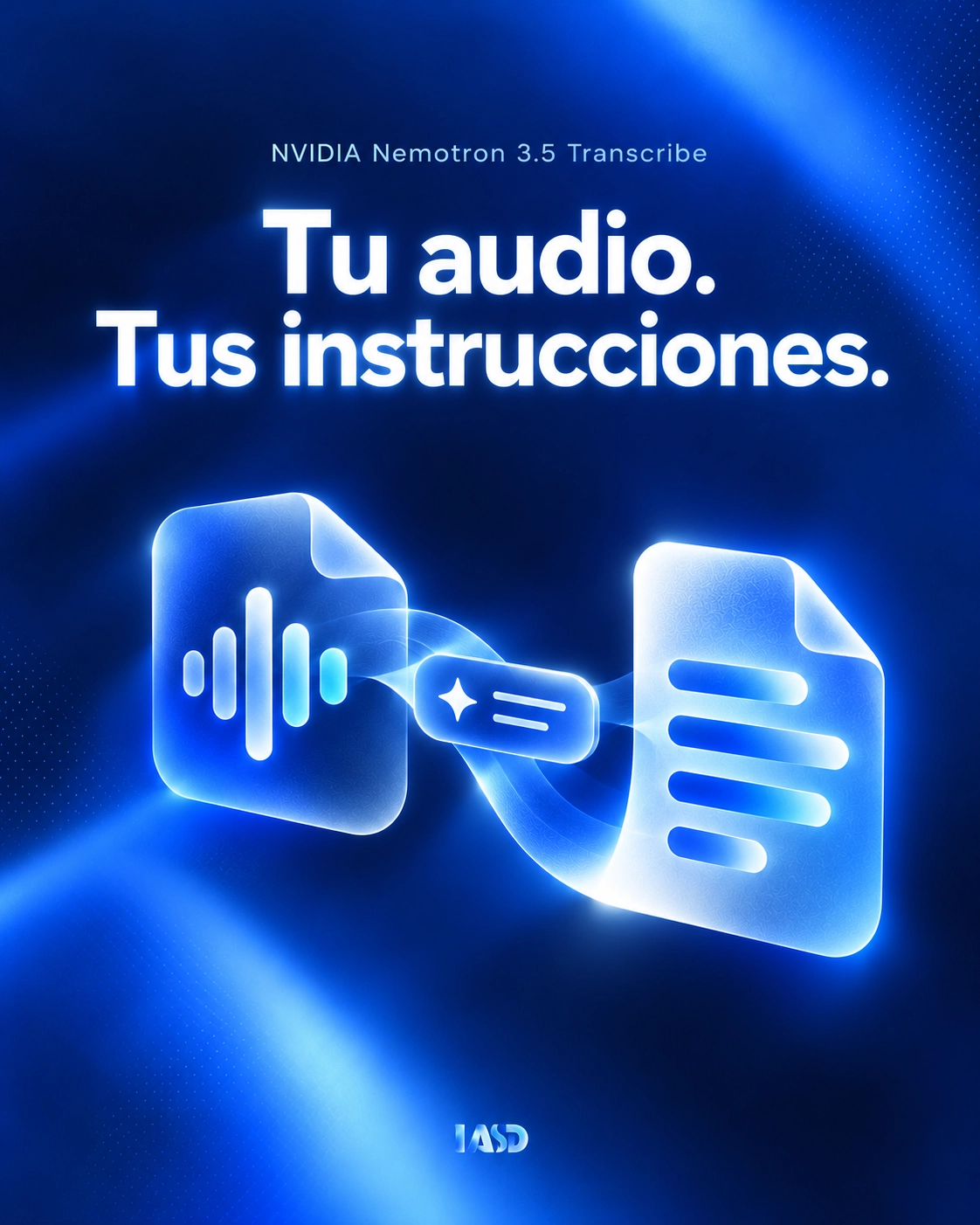
A meeting app, an interview archive, and an educational platform may all work with audio, but they need different results.
NVIDIA introduced Nemotron 3.5 Transcribe, an open-weight model that lets you steer transcription through instructions. It supports recordings up to one hour long and transcription in 40 languages. Official NVIDIA Nemotron 3.5 Transcribe announcement
More control over the output
The part that interests me as a developer is control over the output.
We can request a verbatim transcript, ask for a more readable version that leaves out filler words, or provide context with specialized terms. This makes it possible to tailor the output to how it will be used within the product.
The translation and speaker attribution capabilities have different language coverage than transcription.
For a technical meeting, for example, I’d propose evaluating whether the model correctly preserves product names, figures, and project vocabulary when it generates a version that’s easier to look through.
What I’d measure before integrating it
Before adding it to an application, I’d evaluate three aspects:
- Accuracy: errors in names, quantities, and technical terms.
- Participants: correct attribution when several people interrupt each other.
- Operations: processing time, memory, and cost per hour of audio under the expected load.
These would be my checks to determine whether the model meets the product’s needs.
Where it fits in the architecture
There’s one distinction that shapes how it gets integrated: this model is designed for recorded audio, not streaming transcription.
I’d evaluate it for processing a meeting after it ends, keeping the requirements for live transcription separate.
That makes it possible to define which part of the experience needs an immediate response and which processing can happen afterward.
What outcome would your users need: keeping every word, finding information later, or quickly reviewing what was discussed?