TuCupo
Ticketing platform for events in Peru: buyers choose their zone or seat, pay online and get in with a QR code that is validated at the door.
- Client
- TuCupo
- Year
- 2026
- Service
- Apps and software
- Role
- Collaborative web development
- Format
- Web platform
- Status
- In production
Selling tickets by zone or by seat without selling the same place twice.
A ticketing platform has to protect the capacity of every zone and every numbered seat while many people buy at once, take payments online and let only valid tickets through the door. TuCupo also needed each organizer to manage their own events, and the site to handle the complaints book required in Peru and personal data rights.
A website to buy and a back office to sell, on its own API.
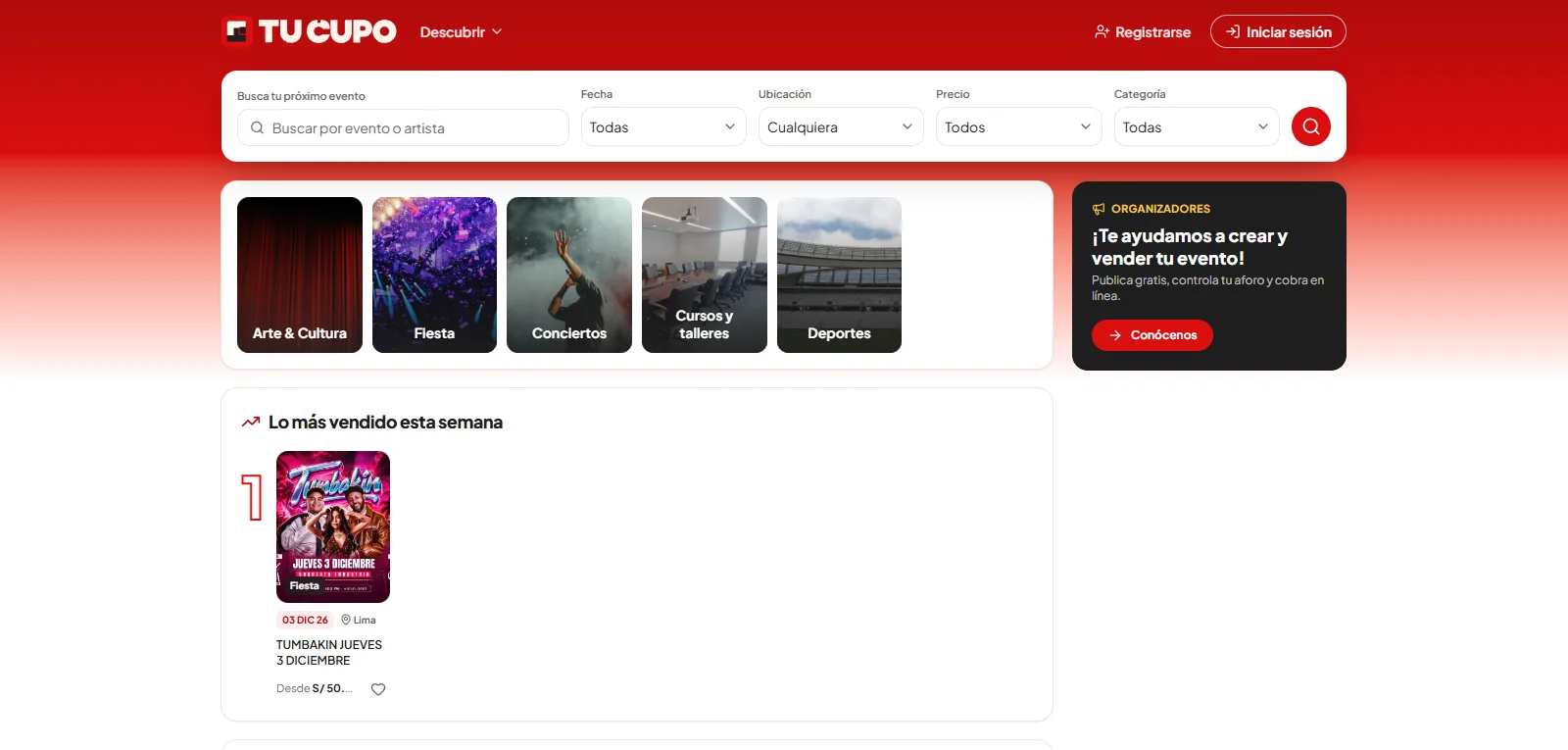
As a team of two developers, we built a Next.js website and a NestJS API that share one data contract. Buyers search by date, location, price and category, choose their zone or seat on the venue map, pay and receive their tickets in their account, with a QR code and as a PDF.
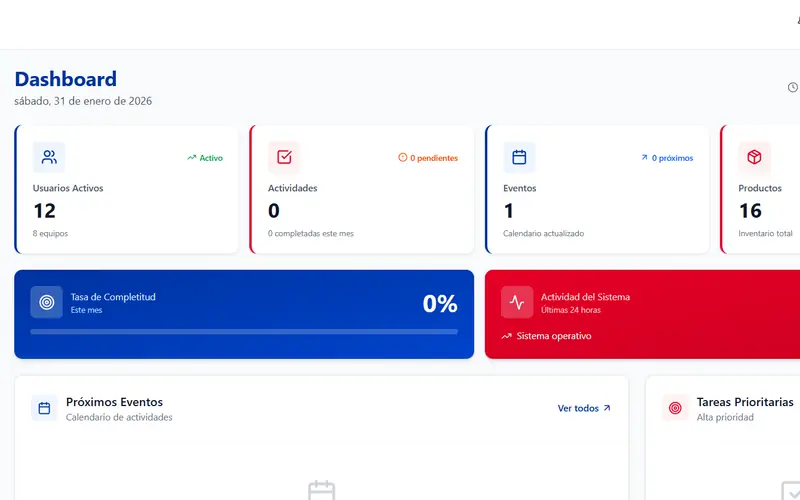
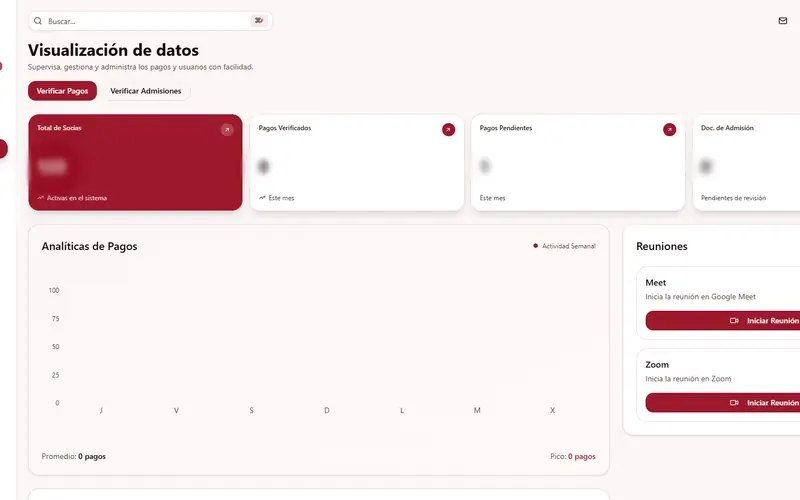
Organizers set up the event, its zones and its ticket types from the back office, follow their sales and validate entry with the scanner. A content manager handles the home page, the blog, the pages and the menus.
What it includes
Event search
Filters by date, location, price and category right from the home page.
Zones and numbered seats
Venue map with general-admission zones or numbered seats, and a notice when a zone sells out.
Online purchase
Cart and order payment. The server recalculates every amount and the order freezes the price of each ticket.
QR tickets
Every ticket carries a QR code, dynamic or static depending on the event, and can be downloaded as a PDF.
Entry control
In-browser scanner for the door, with a log of every scan and staff assigned per event.
Content manager
Home page, blog, pages, menus and media editable from the back office.
Stack and architecture
- Next.js
- TypeScript
- React
- Tailwind CSS
- NestJS
- Prisma
- PostgreSQL
- Redis
- Socket.IO
- Zod
- Docker
- Frontend
- Next.js with the App Router and Tailwind CSS, designed mobile first. The website stores no data of its own: everything comes from the API.
- Backend
- NestJS API organized by modules (events, seating, orders, payments, tickets, content), with permission-based authorization and an audit log.
- Data
- PostgreSQL with Prisma. Amounts are stored as whole cents and seat locks happen inside transactions.
- Integrations
- Culqi payment gateway behind a provider interface, email through Amazon SES and Google Maps on the event page.
What we solved
A seat is never sold twice
Seat and capacity locks use conditional updates inside a transaction, never a read followed by a write.
Money without rounding errors
All prices are handled as whole cents and recalculated on the server; the browser never decides a total.
Tickets that are hard to copy
The QR code can be dynamic: it is generated from a seed that is only delivered to the buyer's account and never appears in the logs.
In detail
- API modules
- 11